While visiting Isaac Newton's birthplace two weeks ago, I saw the apple tree under which he is said to have sat when postulating about gravity. Matt, Julian, Nadia, and I really wanted our own scientifically famous tree, so we swiped a cutting from a branch. And this past weekend Matt picked up some rooting hormone and Miracle Gro. After reading the accompanying literature we cut our portion into two twigs and planted them both. They have a makeshift greenhouse (a clear plastic bag) to help keep them warm and moist on the kitchen ledge.
Since the weekend we have been debating about what to name these new cuttings. I vetoed New and Ton as being too ridiculous. The First and Second Twigs of Motion wasn't quite catchy enough. I think we have decided on Gravitree for one and Twig Newton for the other.
Photos of our darlings coming soon!
Wednesday, 26 April 2006

Saturday, 22 April 2006
thai massage
I went yesterday for a Thai massage--oh, the pain! The masseuse balanced on the back of my thighs for the first section and pulled and twisted my arms, legs, and back at the end. But it feels good to be pushed and pummled by an expert. Next time I will bring a pair of sandals and stay for the steam room--I didn't realise this was included. What wonderful pampering just before I go back to work on Monday.
Wednesday, 19 April 2006
training
Here's an idea I found a while ago. I still think it's a brilliant market niche. iTrain is a company that provides mp3 files for download that combine music and a personal trainer. They have all types of different workouts with instructions given: a treadmill playlist, and ones for kickboxing, cycling, body sculpting, strength training, stretching, and hip hop. They're coming out soon with an outdoor program and a new core workout. Now all I need is an armband for my iPod nano and I'll be set. Oh, and they've extended their market to non-US customers, so I won't have to make up a fake address in Alabama.
Sunday, 16 April 2006
Geek Week 2006
Matt, Nadia, Julian, and I took a magical road trip around England tracing the life of Sir Isaac Newton and doing other geeky things. On Wednesday, we visited Westminster Abbey and saw the memorial plaques to Isaac Newton, Charles Darwin, James Joule, and Lord Kelvin.
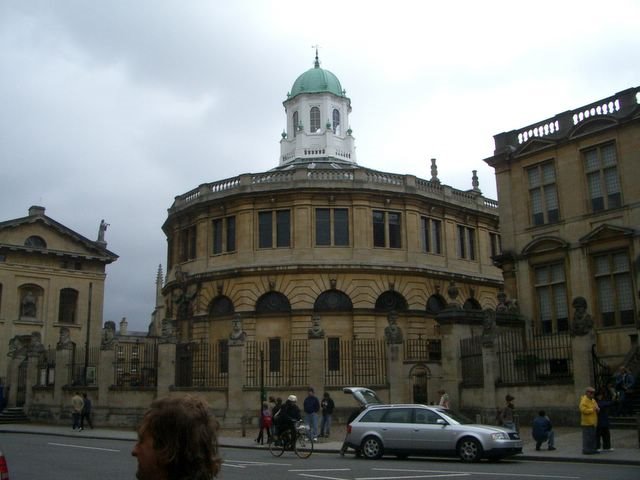
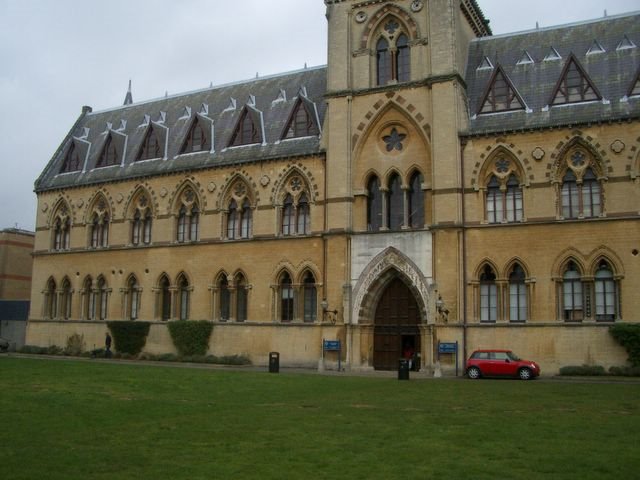
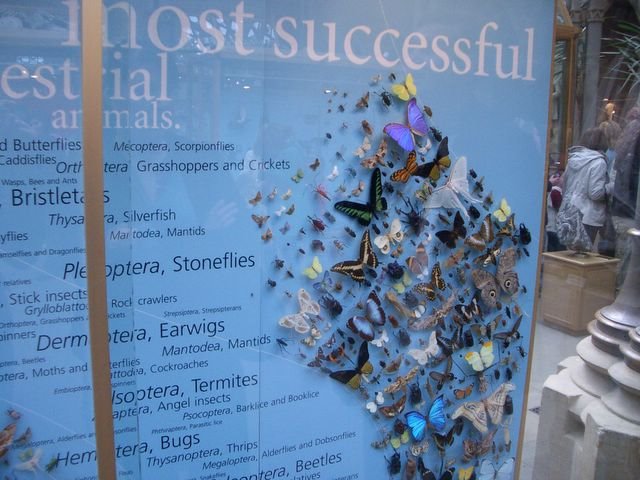
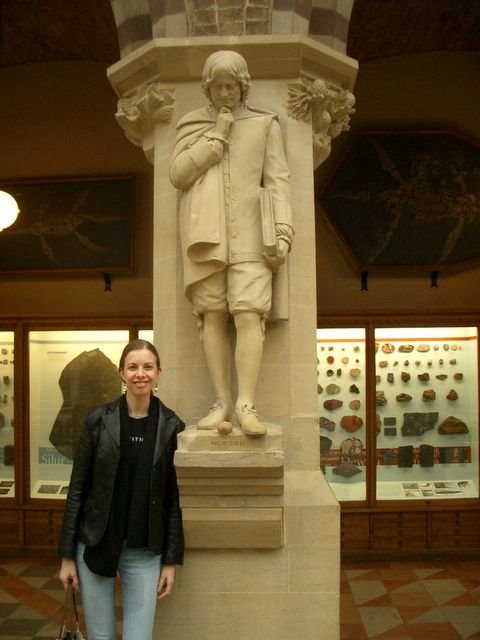
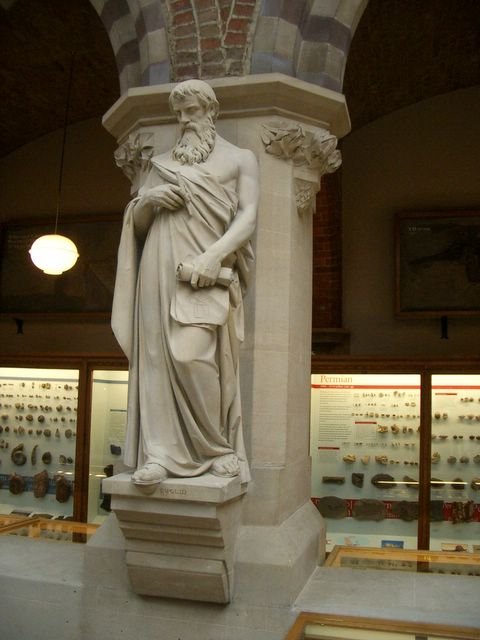
Here is a statue of Euclid at the Museum of Natural History.
Next we visited the adjacent Pitt Rivers Museum. General Augustus Henry Lane Fox Pitt Rivers founded the museum in 1884 with a bequest of 20000 items. He specified they must be displayed in the thematic arrangement that he preferred, not chronologially or by region. So for example, there is a case about weaving that holds European bobbin lace, woven baskets from tribes around the world, and many other kinds of weaving from all parts of the world.
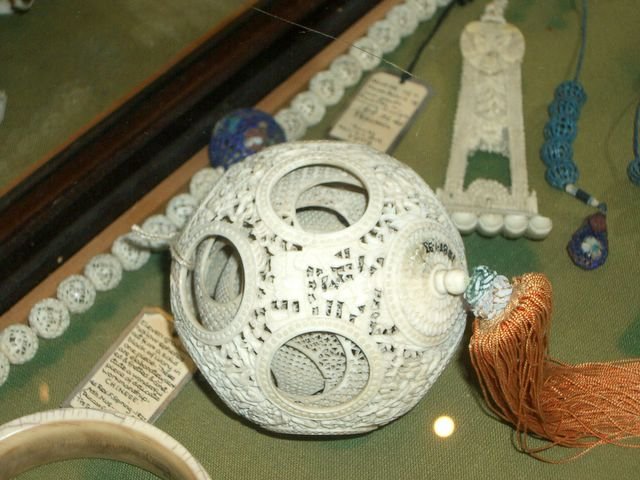

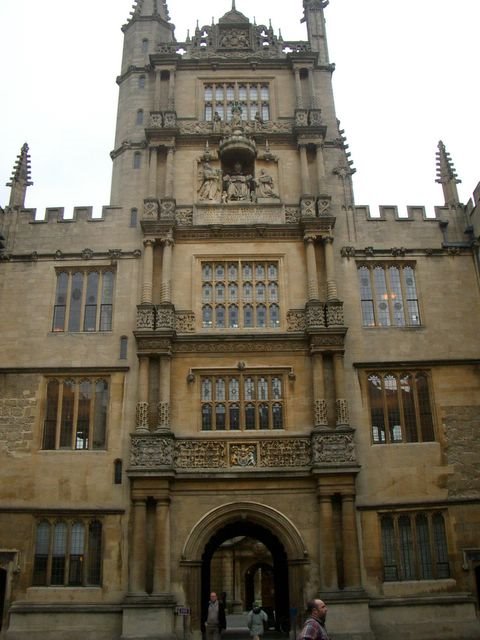
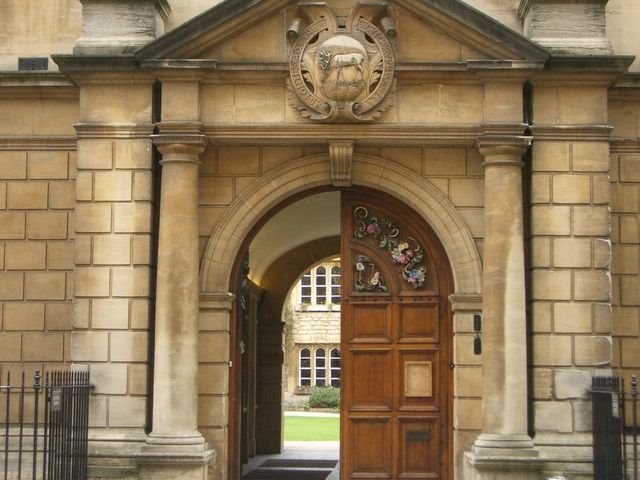
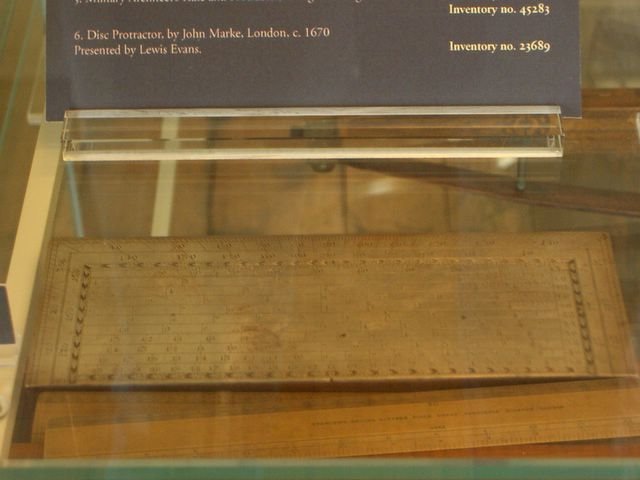
At the Museum of the History of Science, we saw all sorts of mathematical instruments. Here is a rectangular protractor.
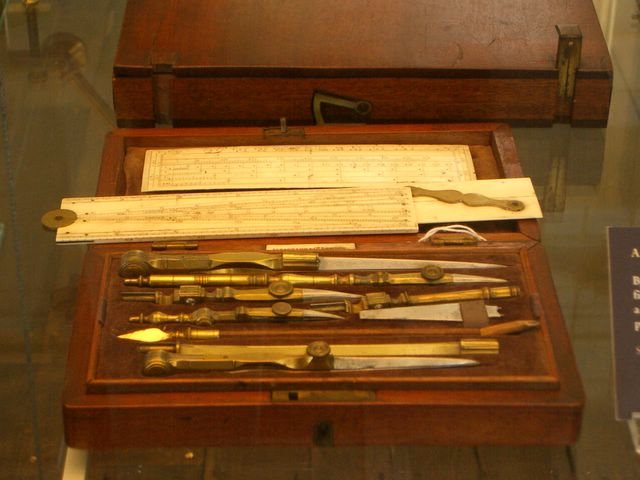
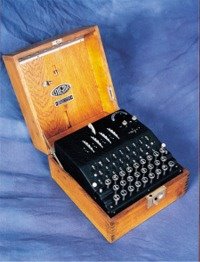
On Friday, we visited Bletchley Park, where the Enigma machine was cracked in WW2. The Enigma machine had three (and later five) dials that were readjusted every twenty-four hours by the Germans to generate enciphered messages.

This is a machine called the Bombe that helped crack the code. On the left is the front of the machine. It has thirty-six sets of three alphabetic dials. The machine can process the cipher text and use frequency analysis to see if any of the settings of the three dials is a possible key for the enciphering. On the right is a part of the back of the machine showing the workings and wires.

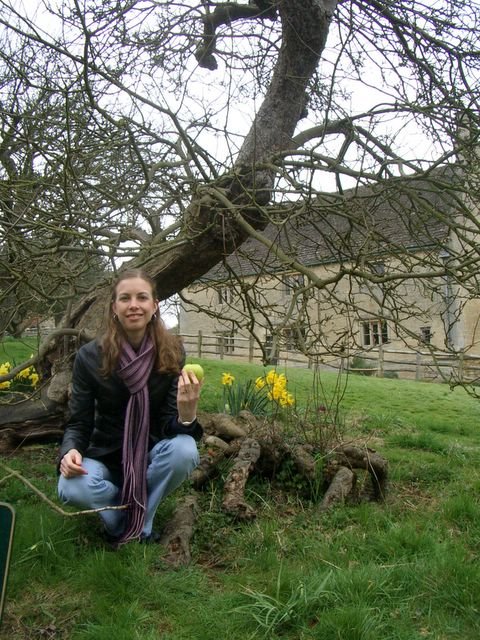
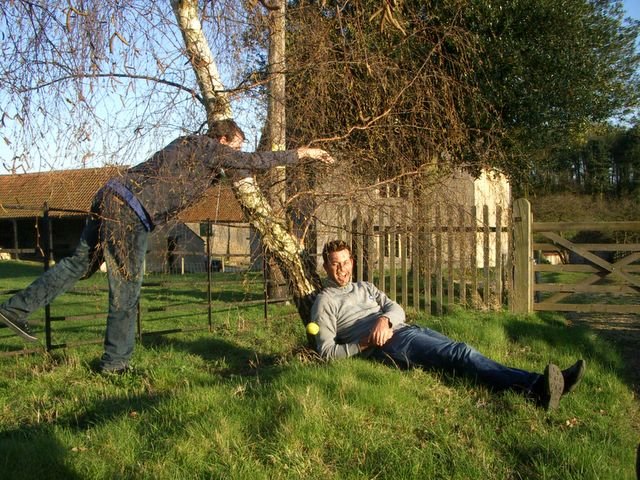
Next we went to see Isaac Newton's birthplace in Lincolnshire. Here I am in front of the apple tree in his front garden. The plaque states that the tree has been designated one of Britain's fifty great trees by Queen Elizabeth II! I am holding an apple that we were using to make an educational film.
Subscribe to:
Posts (Atom)